
Perimenopause, Menopause &
Post-Menopause Therapy
You’re Not Imagining It.
And You Don’t Have to Gut Through It.
Maybe you’ve always known yourself pretty well. You knew how you handled stress, what made you feel good, and what helped you get back to yourself.
And then something changed.
Maybe anxiety appeared seemingly out of nowhere. You started waking up at 3 a.m. You can’t find words you know you know. Your patience is shorter. Your body feels different. You’re exhausted, overwhelmed, disconnected from your partner, or simply thinking:
I don’t feel like myself anymore.
There may be much more happening than stress or “just getting older.” Perimenopause, Menopause, and Post-Menopause can affect your body, brain, emotions, relationships, and sense of self.
You deserve a place where all of it can be talked about and taken seriously.

Perimenopause and menopause can affect far more than your period. Changes in hormones can impact sleep, anxiety, mood, memory, relationships, intimacy, confidence, and your sense of self, sometimes beginning in your 30s. I offer a supportive place to understand what you’re experiencing, feel heard rather than dismissed, and navigate perimenopause, menopause, and post-menopause with greater self-trust, understanding, and support.
Perimenopause, Menopause, & Post-Menopause
Does Any of This Sound Familiar?
“Why am I suddenly so Anxious”
“Why am I crying, angry, or overwhelmed when that isn’t normally me?”
“Why am I forgetting words I know?
“Why does my body feel different when I’m doing the same things I’ve always done?”
“Why can’t I sleep anymore?”
“Where did my sex drive go?”
"“Why am I so irritated by things that never bothered me before?”
“Why don’t I feel like myself?”
“Is something wrong with my relationship—or have I changed?”
Maybe nothing is “wrong” with you. Your body may be changing.
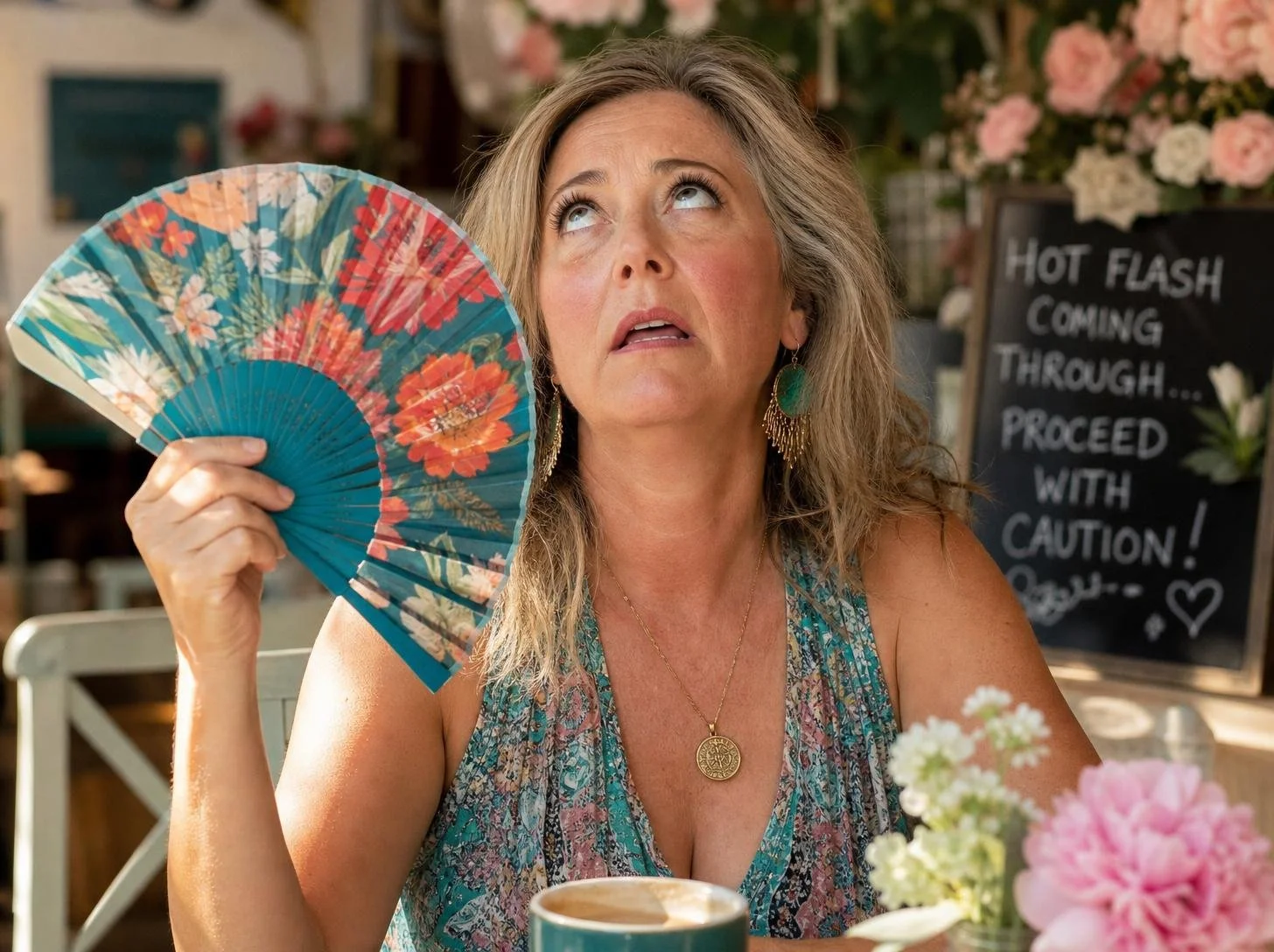
It’s So Much More Than Hot Flashes
For years, the menopause conversation seemed to revolve around periods, hot flashes, and night sweats.
But women are finally talking more openly about how much broader this transition can feel.
-
Trouble falling or staying asleep
Waking in the middle of the night
Hot flashes and night sweats
Fatigue
Headaches or changes in migraines
Joint or muscle discomfort
Heart palpitations
Changes in menstrual cycles
Changes in body composition
-
New or increased anxiety
Brain fog
Forgetfulness
Difficulty finding words
Trouble concentrating
Irritability or anger
Feeling emotionally overwhelmed
Increased sensitivity to stress
Mood changes
-
Changes in sexual desire
Changes in arousal or intimacy
Feeling disconnected from your partner
Wanting more space—or more connection
Less tolerance for relationship patterns
Increased conflict or resentment
Feeling misunderstood by the people closest to you
-
“I don’t feel like myself.”
Changes in confidence
Body image concerns
Burnout
Questioning your priorities
Reconsidering your relationships
Wondering what you want from the next stage of your life
-
Did you know that?
Menopause technically marks one point in time: The day you reach 12 consecutive months without a menstrual period.
The years afterward are post-menopause.
And those years may represent decades of your life.
Some symptoms may settle. Others may continue or evolve.
But this stage of life can also bring questions about:
Identity
Relationships
Sexuality
Aging
Grief
Family roles
Boundaries
Purpose
What you want now
After years of asking:
What does everyone need from me?
you may finally be ready to ask:
What do I need?
Therapy can support that chapter too.
Not every symptom is caused by hormones, and new, severe, or concerning symptoms should always be evaluated by an appropriate medical provider.
Hormones, Midlife, Relationships, and Identity
-
![Midlife women with hormones and balance]()
It’s Not Just Estrogen
Estrogen gets most of the attention when we talk about menopause, but women also produce progesterone and testosterone.
During perimenopause, estrogen and progesterone can fluctuate significantly. Testosterone generally changes more gradually across adulthood.
These hormones don’t operate in isolation.
Hormonal changes interact with sleep, stress, brain chemistry, physical health, relationships, medications, life circumstances, and your nervous system.
That doesn’t mean every difficult day can be blamed on hormones.
It means women deserve care that looks at the whole person instead of separating physical health from emotional health.
-
![Woman sitting in chair looking crazy]()
You Are Not Crazy. You Are Changing.
If your tolerance for stress has changed, your sleep has disappeared, your emotions feel unfamiliar, or you suddenly don’t recognize yourself, your first conclusion does not have to be:
What is wrong with me?
We can begin with a different question:
What is happening to me, what do I need now, and how do I want to move through this next chapter of my life?
Understanding what is happening doesn’t make every symptom disappear.
But understanding can replace shame with curiosity.
-
![Woman sitting at table looking up with wonder with hands crossed under chin]()
Your Life Is Changing Too
Hormonal change rarely arrives in a vacuum.
It often happens during a stage of life when women are already carrying a tremendous amount.
You may be:
Raising teenagers
Launching adult children
Caring for aging parents
Grieving your mother or another parent
Managing a demanding career
Reconsidering your marriage
Navigating divorce or remarriage
Experiencing changes in intimacy
Feeling exhausted from caring for everyone else
Watching friendships change
Questioning your career or purpose
Confronting aging in a culture that celebrates youth
-
![woman confused with hand on forehead holding a coffee cup lookin]()
Who Am I Now?
Midlife can become a reckoning.
After decades of being someone’s daughter, partner, mother, employee, caregiver, problem-solver, or the person everyone counts on, you may begin hearing a quieter question:
Who am I now?
And maybe an even bigger one:
What do I want the rest of my life to look like?
Those questions aren’t selfish.
They matter.
Therapy can give you a place to explore the parts of yourself that may have been pushed aside while you were busy taking care of everyone else.
-
![man and woman couple touching foreheads]()
Your Relationships May Feel It Too
Hormonal change doesn’t happen in isolation.
You may have less tolerance for patterns you’ve lived with for years. You may need more space or more connection.
Your desire may change. Your body may feel unfamiliar. Your partner may not understand what is happening and may interpret those changes as rejection or dissatisfaction.
Women sometimes tell me,“I don’t know whether my marriage changed or I changed”, and that’s worth exploring.
Because I also work with couples and families, we can look at what is happening inside you and between you.
Learn More About Couples Therapy →





Therapy Where You Will Actually Be Heard
-
You won’t come into my office and be told:
“You’re just getting older.” or “It’s normal.” or “You just have to get through it.”
Something can be a natural part of life and still be incredibly difficult.
You don’t have to earn support by suffering more.
-
Therapy does not replace menopause-informed medical care, and I do not diagnose or medically treat hormonal conditions.
What therapy can provide is a place to understand what you are experiencing emotionally, psychologically, relationally, and within the context of everything else happening in your life.
-
Our work will be tailored to you, but we may focus on:
Understanding what you are experiencing without judging yourself
Managing anxiety and emotional overwhelm
Recognizing changes in your stress tolerance
Developing tools for emotional regulation
Rebuilding confidence and self-trust
Exploring changes in identity
Addressing body image concerns
Creating healthier boundaries
Communicating what you need more clearly
Navigating changing intimacy or sexuality
Working through relationship changes
Exploring grief, resentment, anger, or burnout
Supporting healthier sleep and stress-regulation habits
Learning to listen to your body instead of constantly overriding it
Reconnecting with parts of yourself that may have gotten lost along the way
Deciding what you want this next chapter of life to look like
When appropriate, I encourage clients to work alongside qualified medical providers who understand current perimenopause and menopause care.
It doesn’t have to be therapy or medical care.
For many women, the best support considers both.